


Class-A warehouses: everything you need to know
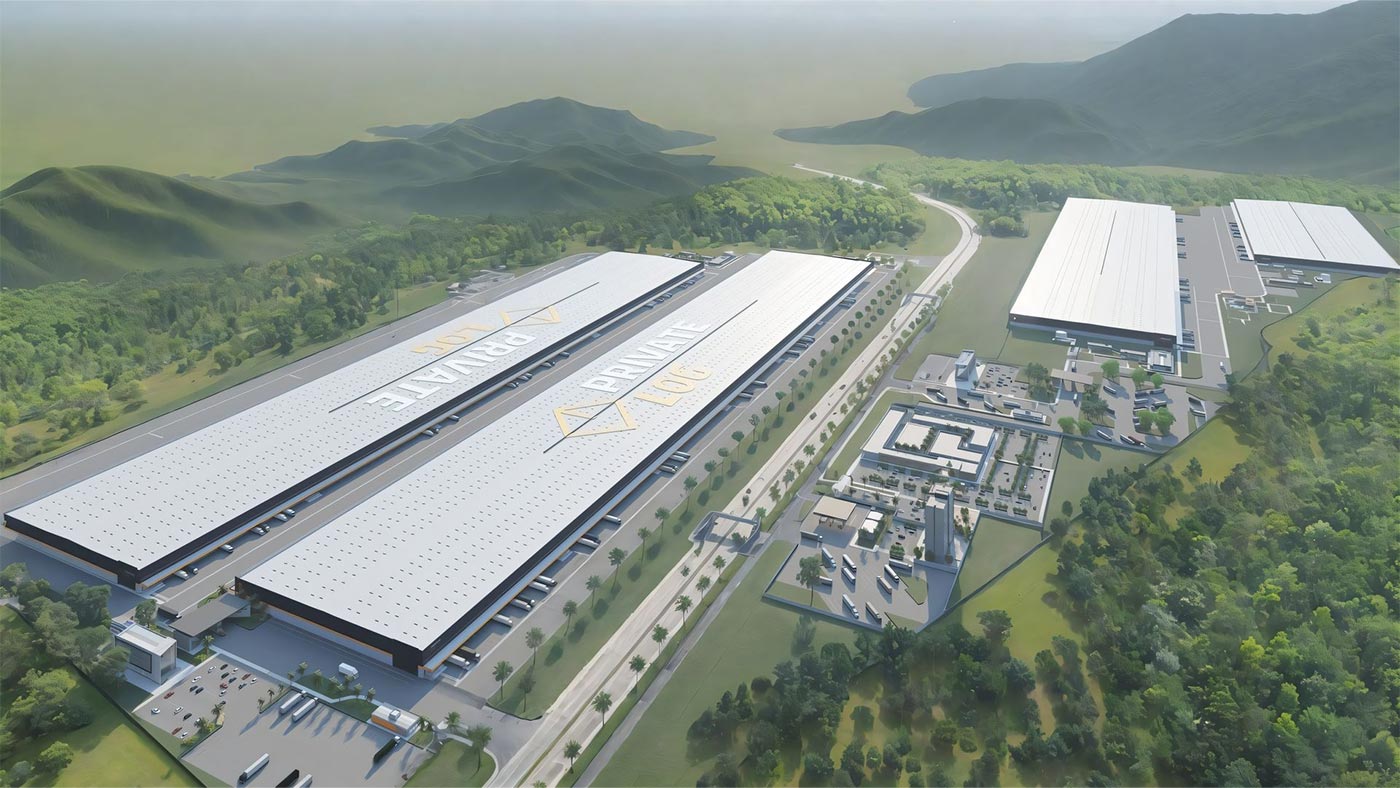
Class A warehouses have gained prominence in the logistics market as a high-standard solution for storage, distribution, and complex operations.
With a focus on advanced infrastructure, strategic location, and sustainability, these facilities represent a significant upgrade compared to conventional warehouses.
In this article, you’ll learn what Class A warehouses are, their key advantages, and why they are at the center of logistics transformation in Brazil and worldwide.
What are Class-A warehouses?
Class A warehouses represent the highest standard of excellence in the storage and distribution sector. The term “Class A” (or AAA) is borrowed from the financial market, where it denotes assets of the highest quality, reliability, and performance.
In logistics, the term refers to industrial facilities that meet strict criteria in construction, operational efficiency, safety, sustainability, and strategic location.
Designed for large-scale and high-complexity operations, Class A warehouses are ideal for companies requiring speed, precision, and control in their logistics processes.
These spaces are typically occupied by major players in e-commerce, manufacturing, logistics providers, and multinational companies – all seeking infrastructure suited for automation, real-time tracking, and high inventory turnover.
In addition to robust construction, these facilities incorporate technologies such as smart ventilation systems, LED lighting, motion sensors, leveled dock platforms, and areas ready for automation.
They also feature high clear heights (over 12 meters), heavy-duty leveled flooring, and multiple docks, allowing for greater storage density and efficient vertical space utilization.
A key differentiator is the integration of sustainable practices. Many Class A warehouses are developed with environmental certifications such as LEED or AQUA and include systems to reduce energy consumption, reuse water, maximize natural lighting, and manage waste effectively.
Main characteristics of Class-A warehouses
1. Strategic location
Class A warehouses are usually located near highways, airports, ports, and major urban centers. This reduces logistics costs and improves delivery times.
Companies like Amazon and Mercado Livre are examples of players that adopt this strategy to boost operational efficiency.
2. High-standard infrastructure
These facilities are built with premium materials and equipped with state-of-the-art technology, including:
- Smart climate control and ventilation systems
- 24/7 monitoring with cameras and security sensors
- LED lighting and leveled, high-resistance floors
- Elevated docks and logistics automation systems
This infrastructure enhances operational performance, safety, and energy efficiency, all of which impact business profitability.
3. High clear height
Unlike traditional warehouses, which typically have ceiling heights under 10 meters, Class A warehouses offer a minimum clear height of 12 meters. This allows for better vertical storage and lower cost per cubic meter.
4. Sustainability and certifications
Environmental responsibility is another defining feature. Many Class A warehouses include:
- Solar energy systems with rooftop photovoltaic panels;
- Water reuse systems;
- Natural lighting optimization;
- Certifications such as LEED or AQUA.
These practices meet growing sustainability demands and reduce long-term operational costs.
High clear height
Unlike traditional warehouses, which typically offer ceiling heights below 10 meters, Class A warehouses provide a minimum clear height of 12 meters.
This allows for optimized vertical storage and greater capacity, which significantly reduces the cost per cubic meter.
Sustainability and certifications
Another key differentiator is the strong environmental commitment. Many Class A warehouses incorporate sustainable practices, such as:
- Solar energy and rooftops with photovoltaic panels;
- Rainwater collection and reuse systems;
- Maximized use of natural lighting;
- Environmental certifications such as LEED or AQUA.
In addition to meeting growing demand for environmental responsibility, these practices generate long-term operational savings.
Advantages of Class-A warehouses
Among the main strategic benefits of Class A warehouses are operational efficiency and flexibility. These facilities can store a wide variety of goods – from perishable food to high-tech equipment – and can be adapted to the specific needs of each operation, ensuring scalability and agile logistics.
Security is also a key feature. With advanced monitoring systems, access control, and 24/7 surveillance, these environments significantly reduce risks of loss, theft, or damage to stored goods.
Furthermore, high-standard logistics facilities offer excellent potential for property value appreciation. The limited availability of assets with such specifications – combined with rising demand for optimized spaces – makes them especially attractive for investors seeking stable, long-term returns.
The future of Class A warehouses
As digital transformation continues to reshape the logistics sector, Class A warehouses are set to become true innovation hubs.
Technologies such as artificial intelligence, the Internet of Things (IoT), and robotics are already being integrated into these facilities, driving automation, predictive maintenance, and real-time operational control.
Class A warehouses at Private Log: Brazil’s largest logistics complex
Private Log stands out as a national benchmark in high-standard logistics infrastructure. Strategically located in Espírito Santo, one of Brazil’s most promising logistics hubs, the project was designed with a focus on operational efficiency, environmental responsibility, and advanced safety features.
Reflecting this commitment to excellence, Private Log’s warehouses feature high clear heights, leveled docks, state-of-the-art monitoring systems, environmental certifications, and smart technologies that ensure efficient climate control, intelligent lighting, and resource reuse.
This modern infrastructure is positioned in an area with privileged access to highways, ports, and airports – enabling seamless multimodal integration and lower transportation costs.
More than just a storage facility, Private Log is a smart logistics ecosystem, ready to host industrial operations, distribution centers, and customized activities, with modules starting from 3,900 m² and options for built-to-suit and cross-docking solutions.
For companies seeking excellence, operational control, and sustainable growth, investing in Private Log means aligning top-tier logistics with strategic returns.
Conclusion
Class A warehouses represent a new standard of excellence in logistics. When combined with strategic location, cutting-edge infrastructure, and environmental responsibility, they are the ideal choice for companies looking to stand out in an increasingly competitive market.
For investors and logistics operators, this type of asset goes beyond being a trend, it is a smart strategy to ensure operational efficiency, long-term savings, and corporate sustainability.
Leia também: Advantages of investing in storage facilities in Espírito Santo